There are two ways to make a vacant home look inviting when you’re preparing it for sale. You can bring in the furniture…. or you can bring in the pixels.
Both can work beautifully. And both can go spectacularly sideways when used in the wrong situation. At Home & Harbour, we offer both real-life staging and Harbour Vision, our virtual staging service, because we don't believe every home needs the exact same solution.
Sometimes a beautifully styled, physically staged home is exactly what a buyer needs. Sometimes virtual staging is the smarter, more practical choice. And sometimes a digitally added fiddle-leaf fig is just... not going to save the day.
Here's how to know the difference.
First: What Is Virtual Staging?
Virtual staging uses digital imagery to add furniture, artwork, rugs, lighting and accessories to photographs of an empty or sparsely furnished home.
It's particularly useful for online marketing because buyers can see what a room could look like without physically bringing in a single sofa.
At Home & Harbour, Harbour Vision is designed to help buyers understand the potential of a space while keeping the property's actual architecture, layout and features front and centre.
And that last part matters.
Because virtual staging should help someone understand a home—not convince them that a 900-square-foot condo has room for a grand piano, a sectional and an aspirational indoor olive tree.
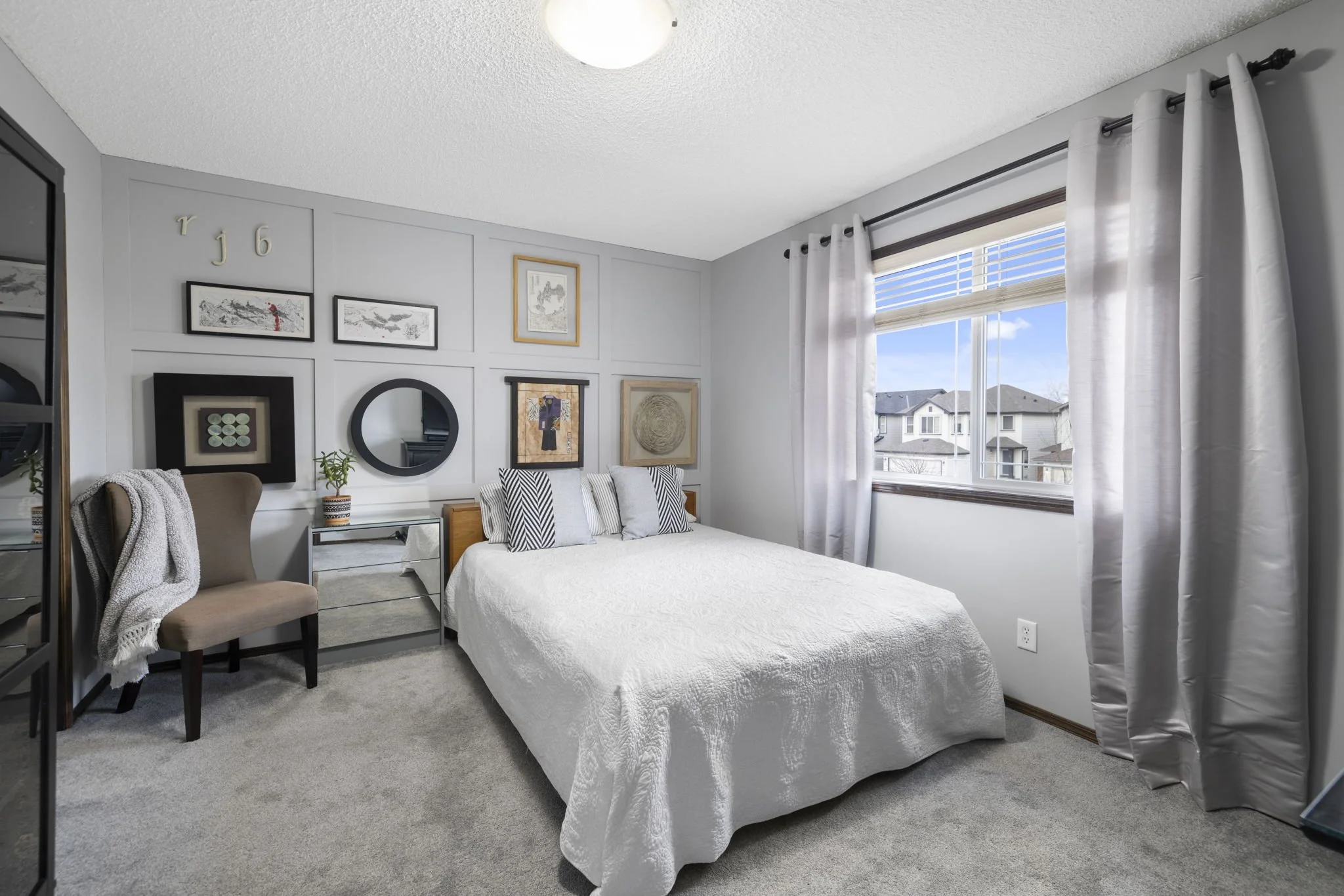
Real Staging
Real-Life Staging: The Real Thing
Traditional or physical staging means bringing actual furniture and accessories into the home. A staged property gives buyers the opportunity to experience the scale, flow and feeling of a space in person—not just through a listing photo.
They can walk around the dining table, see whether the sofa leaves enough room to move through the living room, experience how a bedroom feels with appropriately scaled furniture. In other words, they get to experience the home as a home.
And there's something about that which photography simply can't completely replicate.
The Case for Virtual Staging
Let's start with the good stuff.
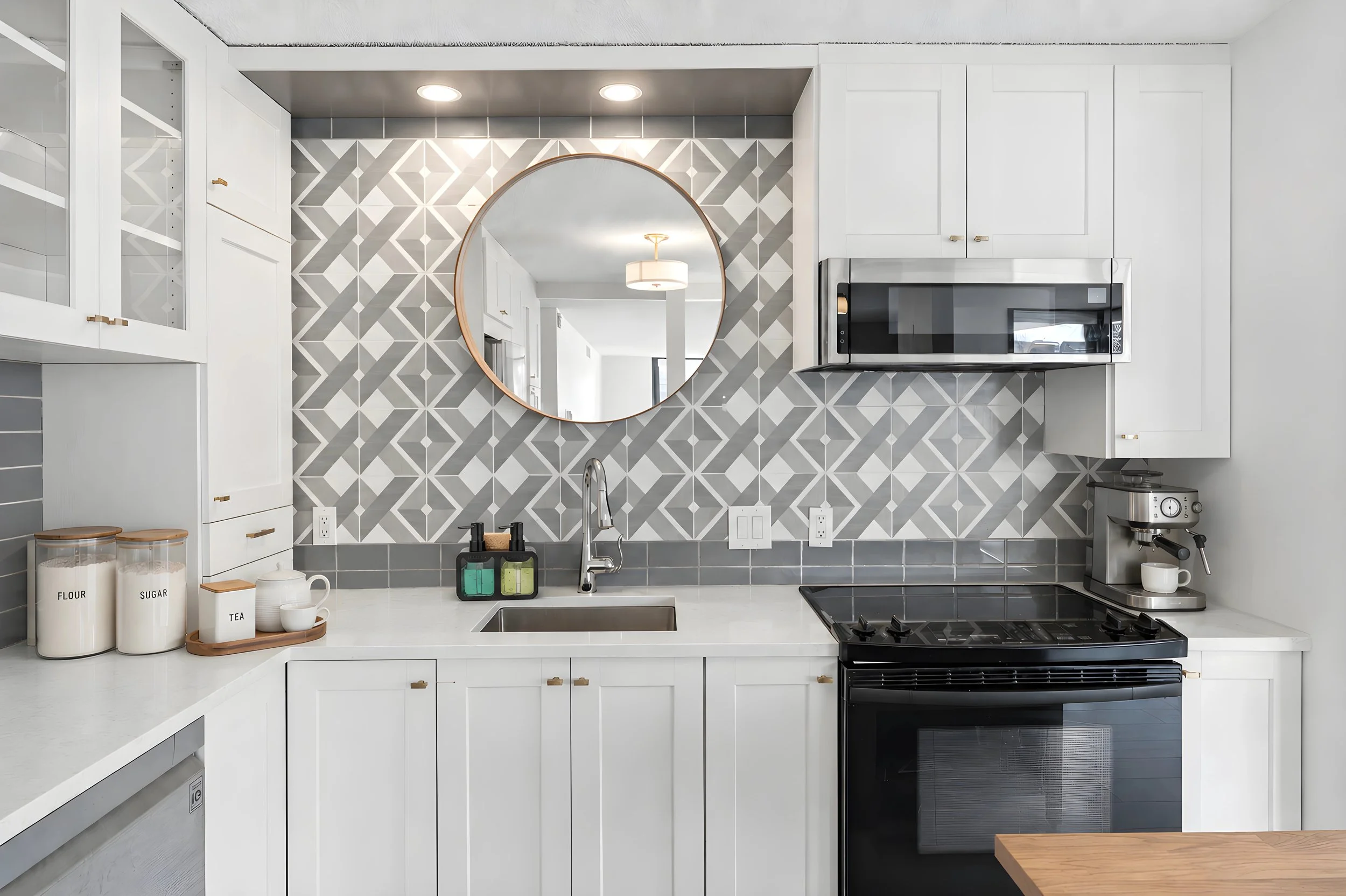
Virtually Staged Kitchen
It's considerably more affordable.
Virtual staging can cost a fraction of physically furnishing an entire vacant property. For sellers who don't need a full staging package—or who have a property where physical staging isn't practical—that can make a lot of sense.
It's fast.
There is no delivery truck, no furniture installation and no coordinating access for a staging crew. Photos can be transformed relatively quickly, which is particularly useful when you're working with a tight listing timeline.
You can show different possibilities.
Want to demonstrate that an awkward room could work beautifully as a home office? Want to show a living room with a more contemporary aesthetic? Virtual staging can help buyers see possibilities that may not be obvious from an empty room.
It's great for certain properties.
Virtual staging can be particularly effective for:
Vacant investment properties
Rental properties
New construction
Properties where physical staging isn't practical
Homes that are occupied but difficult to photograph without extensive furniture editing
Spaces where you primarily need to communicate scale or function online
And perhaps most importantly: A beautifully executed virtual image can stop the scroll. In a world where buyers often see your home online before they ever see it in person, that's not nothing.
“To stage or not to stage, that shouldn’t even be a question.”
But Here's Where Virtual Staging Can Go Wrong
Let's talk about the elephant in the digitally furnished room: People know.
Today's buyers are very familiar with virtual staging. And many don't particularly like it, because when it's done badly, it can feel fake.
Furniture can be incorrectly scaled. Lighting can look unnatural. Rugs can float suspiciously above the floor. Windows can suddenly have curtains that weren't there. And occasionally, a room gets furnished with pieces that would require an architectural miracle to actually fit.
The biggest problem isn't that virtual staging exists, it's when the image creates an expectation that the real property can't deliver. If a buyer falls in love with a beautifully furnished virtual room and then walks into an empty space that feels completely different, you've created a disconnect… and that disconnect can work against the emotional response you're trying to create.
Buyers can't experience scale in quite the same way.
A photograph can suggest scale. It can't replace physically standing in a room. A buyer may think they understand how large a sofa would be, but seeing actual furniture in the space gives them much more information about proportion and flow.
It doesn't create an in-person experience.
Real staging engages more than just the eyes. The buyer walks through the home and experiences how the spaces connect. They can imagine sitting at the dining table, can see how the sofa relates to the fireplace, understand the distance between the bed and the closet. That physical experience can be incredibly valuable.
Some buyers simply prefer the real thing.
And that's okay. Not every buyer wants to mentally Photoshop themselves into a property.
Some people walk into a beautifully staged home and immediately think:
“Yep. I can live here.”
That's the feeling we're after.
The Case for Real-Life Staging
Physical staging has a few advantages that are difficult to replicate digitally.

Real Staging
It shows buyers exactly what they're getting.
Actual furniture demonstrates the real scale and functionality of a room. No guessing required.
It helps buyers emotionally connect.
This is a big one. A well-staged home isn't just about making a room look pretty. It's about helping someone imagine their life there. The morning coffee, dinner with pals, the sofa spot everyone fights over, the guest room that might finally get used, and (my Romantasy loving favourite) little reading corner they didn't know they needed.
That's where good staging earns its keep.
It photographs beautifully.
When a home is physically staged with the right furniture, lighting, art and accessories, the resulting photography feels cohesive because the environment is actually cohesive. Those photos become the first impression for hundreds—or thousands—of potential buyers.
It can help with awkward spaces.
Have a weird little nook? A room that could be a den, office or guest room? A massive open-plan space that feels strangely empty? Sometimes showing someone the physical solution is much more powerful than telling them what they could do.
To stage or not to stage, that shouldn't even be a question. So... Which Should You Use? The answer is delightfully unsatisfying: It depends.
Choose virtual staging when:
The property is vacant and physical staging isn't practical.
Virtual furniture can quickly add context and warmth to empty listing photos.
You're working with a limited staging budget.
Virtual staging can give you a polished online presentation without the cost of physically furnishing the entire property.
You want to demonstrate a room's potential.
A flex room, office or awkward space can sometimes benefit from seeing a suggested use.
The property is primarily being marketed online.
Virtual staging can make listing photography more engaging and help buyers understand an otherwise empty space.
Choose real-life staging when:
You want buyers to experience the home emotionally.
Physical staging allows buyers to see, feel and move through the space with furniture in place.
The layout or scale is difficult to understand.
This is where real furniture can be particularly helpful.
The property has a lot of character or architectural details.
A thoughtful physical setup can complement those details without digitally altering the environment.
You're selling a home where the in-person experience really matters.
Because ultimately, buyers don't purchase photographs, they purchase the property.
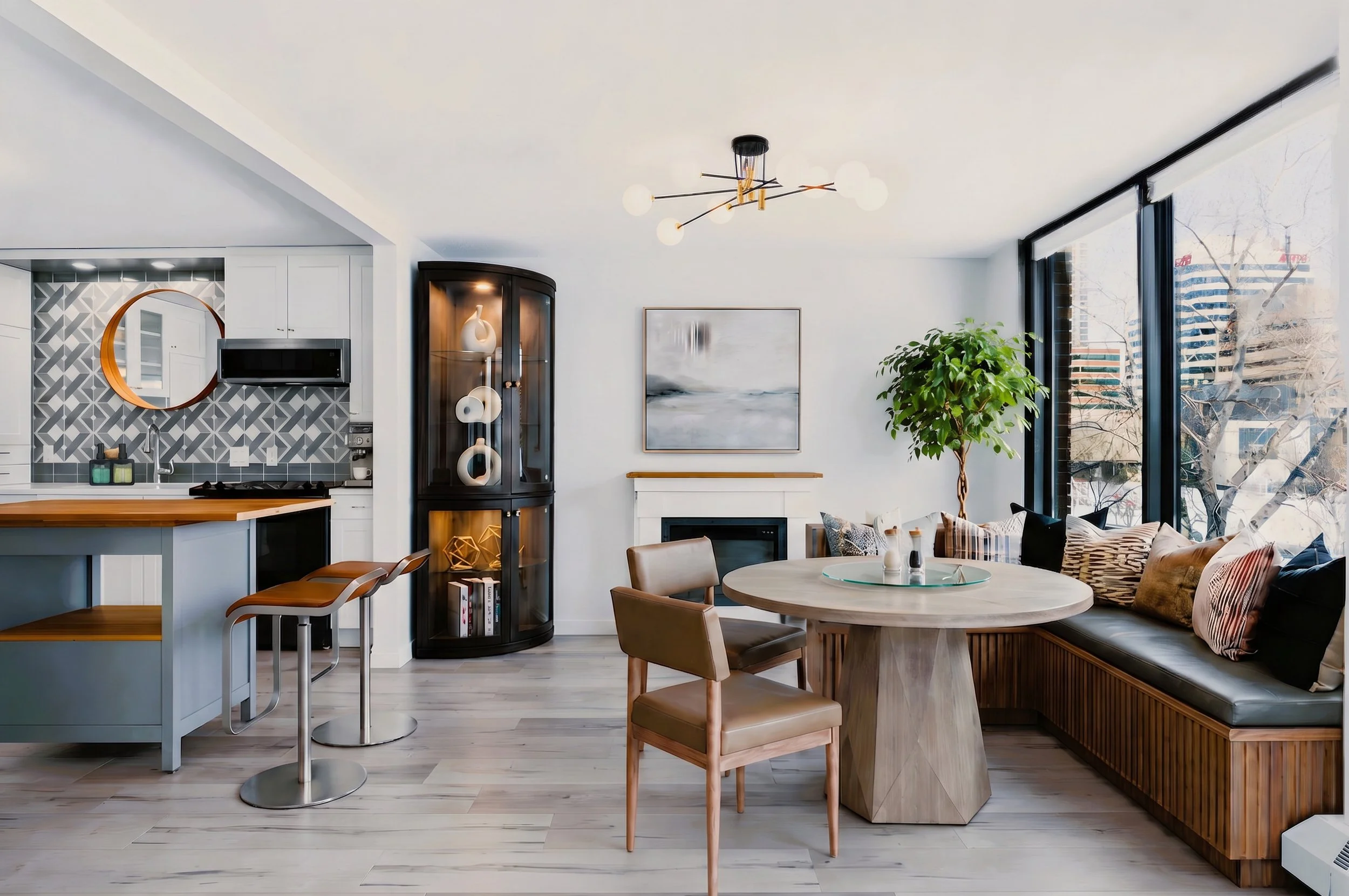
Virtually Staged
And Sometimes... You Can Do Both
This is where things get interesting.
Virtual and physical staging don't have to be competitors.
They can actually work together.
Perhaps you physically stage the main living areas where scale and flow matter most, while using virtual staging to show how an additional bedroom could function as an office.
Or perhaps you're working with a completely vacant property and use physical staging selectively in the most important rooms, with virtual staging used for secondary spaces.
The goal isn't to pick a team.
It's to choose the right tool for the property.
The Home & Harbour Approach
At Home & Harbour, we don't believe in following a staging checklist just because someone on the internet said every house needs three cushions, a bowl of lemons and a strategically placed hardcover book.
We look at the home first:
the architecture
Its natural light
the layout
who is the buyer
price point
location (location, location)
Also, importantly, how it's going to be experienced both online and in person. Sometimes that means bringing in beautiful, appropriately scaled furniture and creating a home buyers can physically fall in love with. Sometimes it means using Harbour Vision to help buyers see the potential without the logistics and expense of physical staging. And sometimes the answer is a combination of the two.
Because good staging isn't about making every home look the same. It's about making the right things impossible to miss.
Ready to see what your home could look like?
Whether you're considering physical staging, virtual staging, or you're simply standing in your empty living room wondering what on earth you're supposed to do with it, we're happy to help.
Home & Harbour offers thoughtful home staging and Harbour Vision virtual staging throughout Greater Victoria and Vancouver Island.
Your home already has a story.
We're just here to help buyers see it.